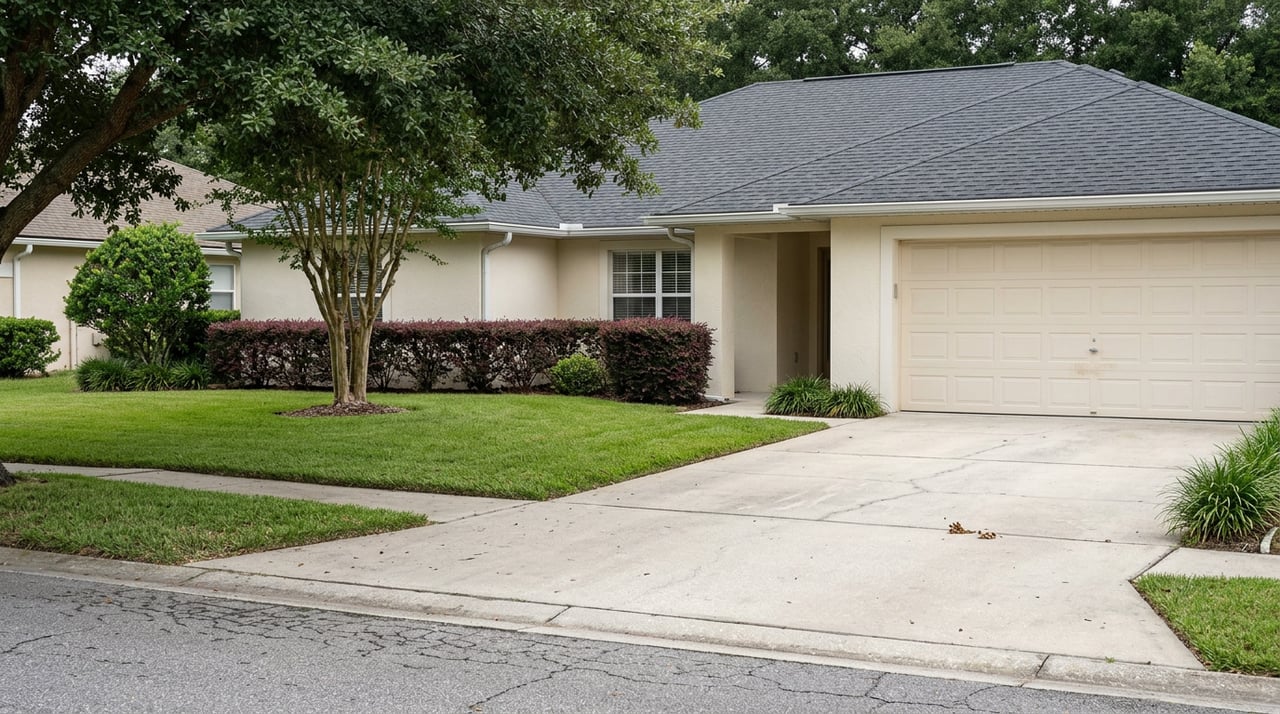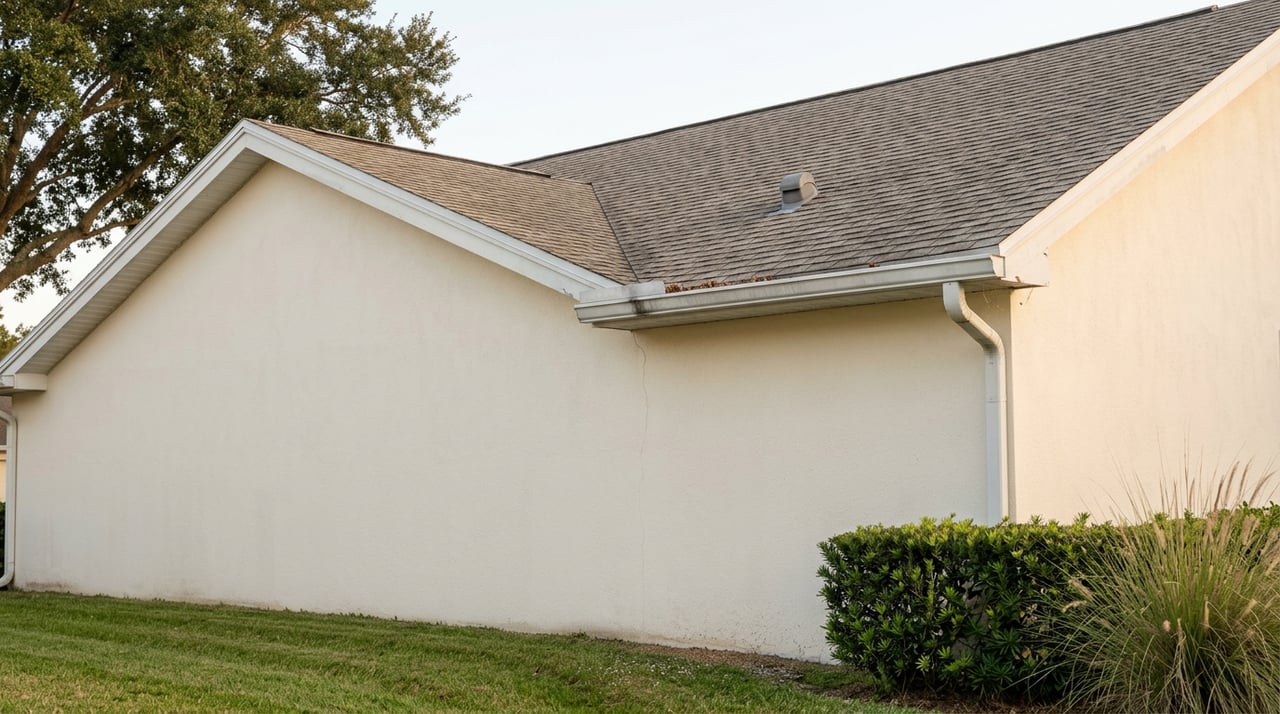
A buyer walks into a resale in Hacienda or Orange Blossom Gardens, the kind of listing everyone in The Villages calls a bargain because the bond is paid off and the county taxes run lower than almost anywhere else in Florida. The price feels like a win. Then the insurance quote comes back, and the agent on the phone starts asking about the roof's install date, not its condition, and mentions a law that was supposed to fix this exact problem.
Here's the part that catches people off guard at the worst possible moment, usually a week before closing: that law never passed. Senate Bill 808 and its identical House companion, HB 815, would have expanded Florida's roof-age insurance protections. Both died in the Insurance and Banking Subcommittee on March 13, 2026. If you read otherwise somewhere this year, you read a mistake that's been repeated across a surprising number of roofing and insurance sites.
What this means for anyone buying, selling, or already living in The Villages' older sections is worth sitting with, because the actual rule that does apply is narrower than the one that got reported, and it lands hardest in exactly the neighborhoods where the bond-free price tag is the whole appeal.
The Law That Didn't Make It
You can check the record yourself on the Florida Senate's own bill page: SB 808 would have extended the existing 15-year roof-age floor beyond standard homeowner policies to cover condo associations, landlords, and other residential property owners, and it would have added roof consultants and registered roof observers to the list of professionals allowed to certify a roof's condition. Both changes stalled in committee. Neither is law.
That distinction matters because a lot of 2026 content treats the bill as settled fact. It wasn't close. The committee never advanced it to a floor vote.
What Actually Still Protects You
The rule that has been in place since the 2022 legislative reforms is Florida Statute 627.7011, and it's narrower than the version that failed this year. An insurer cannot refuse to issue or renew a standard homeowner's policy solely because a roof is less than 15 years old. Once a roof crosses that 15-year mark, the insurer can require an inspection, and if an authorized inspector certifies at least five years of remaining useful life, the carrier generally can't use age alone as grounds to drop coverage. In 2024, House Bill 1611 widened who counts as an authorized inspector to include licensed roofing contractors alongside general contractors and home inspectors, which made that certification easier and faster to get.
None of that changed this year. It's simply what remains true after the bigger expansion failed.
The practical difference for a Villages buyer: your protection stops at the standard homeowner policy. If you're buying a rental property, a condo, or anything outside a standard HO-3 form, the gap that SB 808 tried to close is still open.
Why This Lands Hardest North of 466
The Villages' oldest sections, the ones built through the 1980s and 1990s in what residents call north of 466, carry the lowest prices in the entire community and bonds that are frequently paid off or close to it. That's the genuine draw, and it's real money. But homes from that era have already been through at least one full roof replacement, often during the resale-prep wave of the mid-2000s. A shingle roof put on in 2009 or 2011 to get a house ready for market is now 15 to 17 years old in 2026, sitting exactly at the underwriting threshold that triggers a mandatory inspection.
That's a different problem than the one most buyers picture. The house isn't falling apart. The roof might have five, ten, even fifteen years of service left. But the age alone is enough to trigger scrutiny, and the coverage type often shifts from Replacement Cost Value to Actual Cash Value in the process, which means a future claim pays out the depreciated value of that roof rather than the cost to replace it new. On a 17-year-old architectural shingle roof, that gap between ACV and RCV can run into real money the day you actually need to file.
South of 466, in Fenney and Eastport, the math runs the other direction. Those roofs are new enough to sail through underwriting without a second look, but the trade is a bond that commonly runs $20,000 to $40,000 or more on a resale in those sections. Neither zone is the obvious winner. The savings just show up in different places.
What the Roof-Age Threshold Actually Costs
| Scenario | What Happens at Renewal or Purchase | Typical 2026 Cost Impact |
|---|---|---|
| Roof under 15 years | No age-based denial or non-renewal under 627.7011 | Standard premium, wind mitigation credits still apply |
| Roof 15+ years, inspector certifies 5+ years remaining | Insurer generally can't drop coverage on age alone | Inspection cost roughly $75-150; policy may still convert to ACV |
| Roof needs full replacement before offer accepted | Buyer or seller negotiates replacement or credit | Full replacement runs roughly $8,500-$18,000 for standard shingle, $15,000-$25,000 for architectural shingle depending on size and complexity |
| Roof replaced and documented | Wind mitigation inspection can unlock a fresh discount | Inspection pays for itself quickly when it moves a policy several hundred dollars a year |
The number that should change how a buyer thinks about the "cheap north" versus "bonded south" decision isn't the bond balance. It's the roof's actual install date, which almost never shows up on the listing sheet the way the bond balance sometimes does.
The Sumter County Math Working in Your Favor
There's a real upside buried in all of this. Sumter County, where most of The Villages sits, posted the cheapest average homeowners premium in Florida for 2026: roughly $1,620 a year on a $300,000 dwelling, according to a statewide county-by-county analysis of 2026 rate filings. That's the payoff of being inland, roughly 60 miles from either coast, with no hurricane storm-surge exposure at all.
Florida's insurer of last resort has also largely emptied out of the county. Citizens Property Insurance's own county reporting shows personal residential policies in Sumter fell from 1,337 in May 2024 to 657 by May 2026, a drop of just over 50 percent in two years, as private carriers picked up the business through the state's depopulation program. Statewide, Citizens shed roughly 541,000 policies in 2025 alone, according to Florida Realtors' reporting on the 2025 numbers, and the company carried through an average rate reduction for most policyholders in early 2026 as its exposure kept shrinking. A thin Citizens presence in your county is generally a sign private carriers are actively competing for the business, not avoiding it.
There's also a construction detail that works in most Villages homes' favor regardless of age: the post-2002 building code era brought concrete block construction across The Villages, Middleton, and Eastport that documents unusually well on a wind mitigation inspection, which is the report that unlocks premium credits for things like hurricane straps and impact-rated openings. A roof's age and a home's wind mitigation profile are two separate conversations with your insurer, and it's worth having both before you assume the worst about an older house.
Before You Write the Offer
- Ask the seller for the roof's install date and any wind mitigation inspection on file, not just the listing description of its condition.
- If the roof is 15 years or older, ask whether the current owner has an authorized inspector's certification of remaining useful life. That document travels with the negotiation, not the house automatically.
- Get an insurance quote before you're under a tight contract deadline. A quote that comes back as Actual Cash Value on the roof is a number worth negotiating over, not a surprise to absorb at the closing table.
- If you're comparing a bond-free north-of-466 home against a bonded Fenney or Eastport listing, put the roof-age insurance math next to the bond balance before deciding which one is actually cheaper to own for the next ten years.
FAQ
Does a roof over 15 years old mean I can't get insured at all? No. The 2022 rule still protects you from an automatic denial based on age alone, as long as an authorized inspector certifies at least five years of remaining useful life. The more common outcome is a shift to Actual Cash Value coverage rather than an outright refusal.
Does the failed law mean nothing changed for condo owners or landlords this year? Correct. The expansion that would have covered condo associations and rental properties beyond standard homeowner policies died with the bill. If you own a rental or condo in The Villages, the standard homeowner statute doesn't reach your policy the same way, and that gap is worth discussing directly with your insurance agent.
Should I replace my roof before listing if it's approaching 15 years? It depends on the numbers. A documented inspection certifying remaining useful life sometimes accomplishes the same underwriting outcome as a full replacement at a fraction of the cost, and it's worth pricing that option before committing to a full tear-off.
If you're weighing a bond-free home up north against new construction down south, or you just want a straight answer about what a specific property's roof and insurance situation actually looks like before you write an offer, Caroline Fromkin can walk through the real numbers with you. Reach out for a free home valuation or a no-obligation consultation, and get the version of this conversation that happens before the contract, not after.