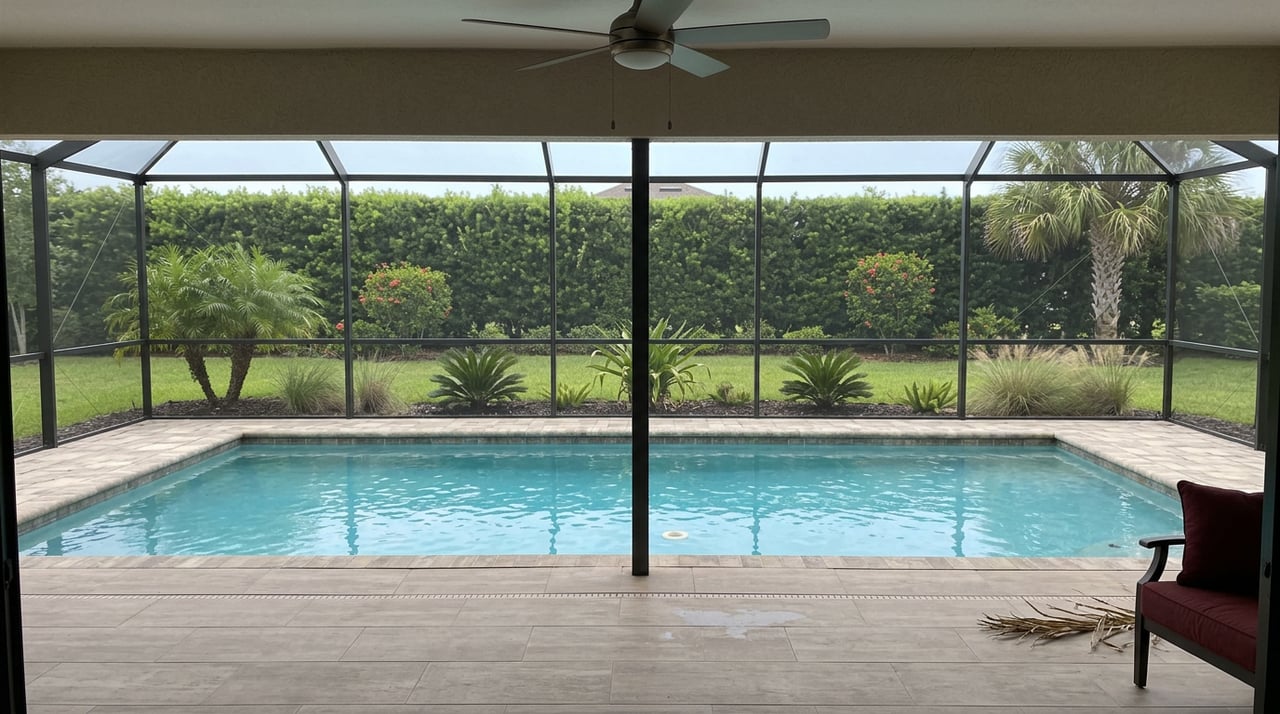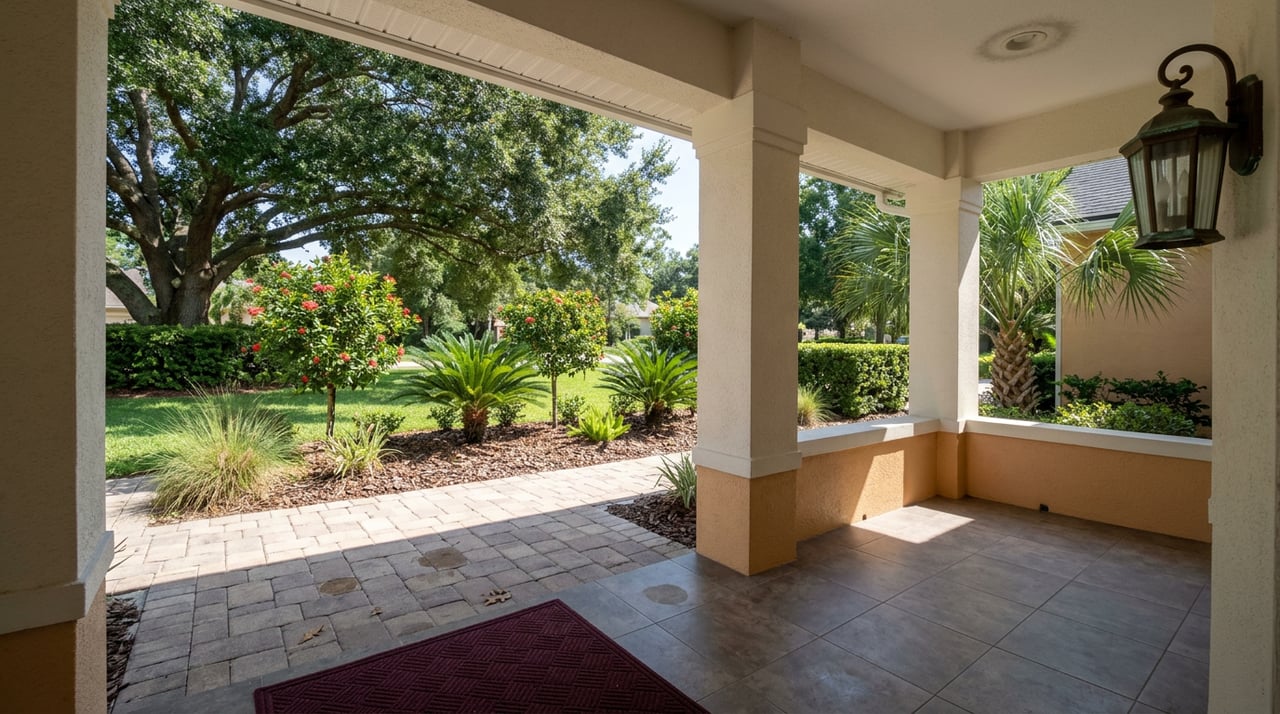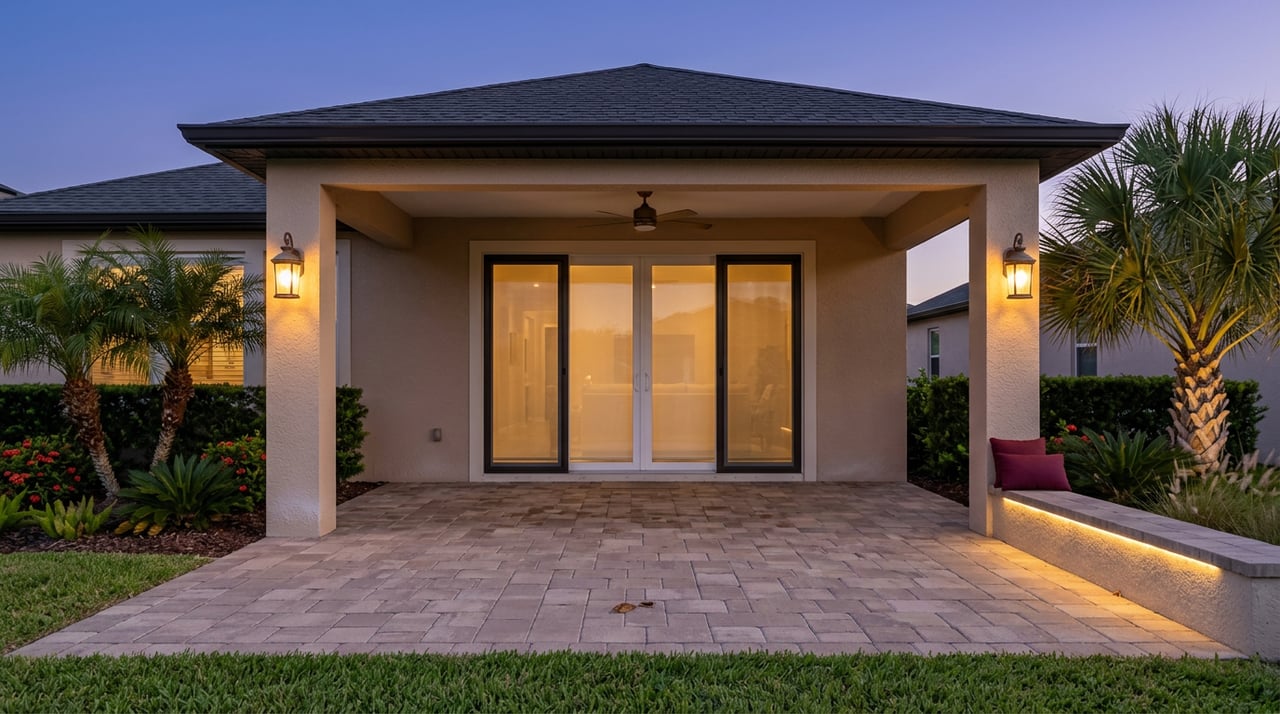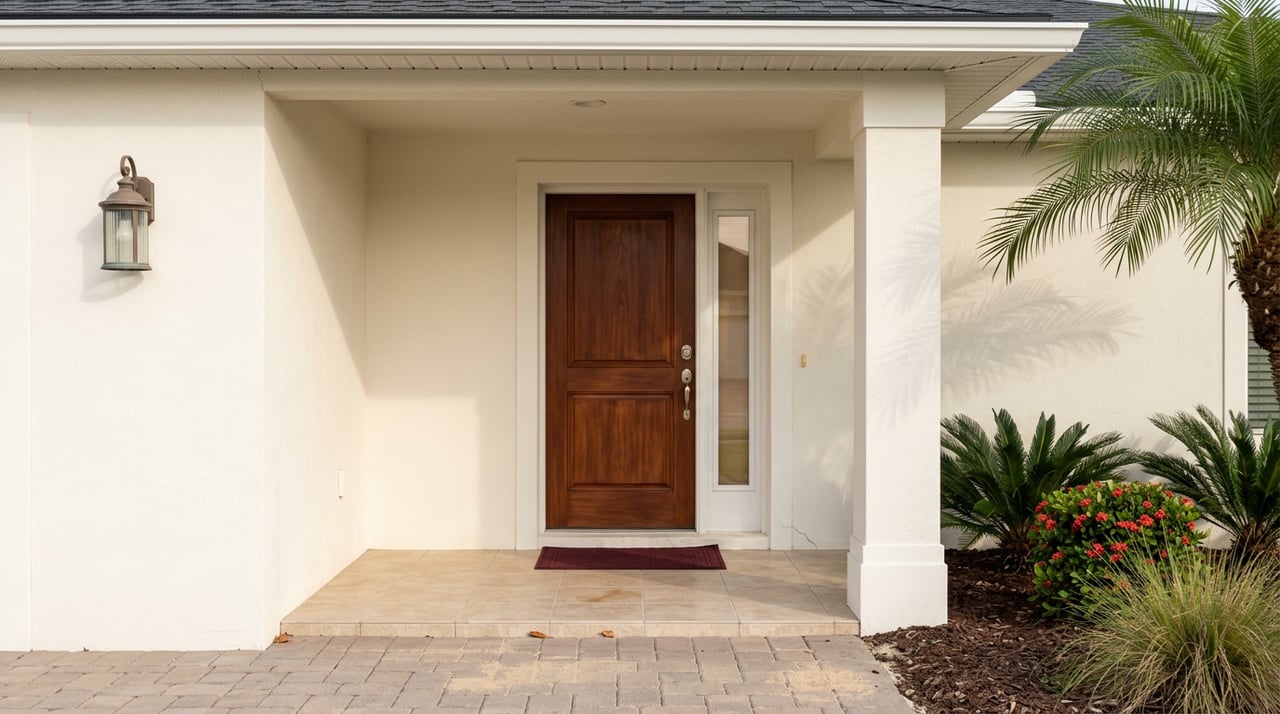
Two homes sit ten minutes apart in The Villages. Both list at $355,000. Both are three-bedroom, two-bath single-story homes with attached garages, tidy stucco, and a golf cart path out the back. On the portal comparison page, they look interchangeable.
They are not. One is a resale in the older northern section where the infrastructure bond was paid off years ago. The other is newer construction near the Eastport corridor, where the bond balance attached to the deed is still north of $30,000. Same list price, different true cost of ownership. The number that separates them does not appear on the MLS, does not appear on Zillow, and only surfaces when your title company pulls the payoff letter a few days before closing.
The number the MLS does not show
Every home in The Villages carries a Community Development District bond. It is a non-ad valorem special assessment authorized under Florida Statute Chapter 190, and it financed the roads, utilities, stormwater systems, and recreation facilities in each village when it was built. The bond is repaid over 20 to 30 years through a line item on your annual property tax bill labeled "Bond Debt Assessment," and it runs with the land, not the owner. When a home sells, whatever balance remains transfers to the buyer unless it is explicitly paid off at closing.
The size of that transferring balance is what most out-of-state buyers underestimate. Older homes may carry roughly $14,000 remaining on a Patio Villa, while newer homes in the southern expansion can be $23,000 to $28,000 or higher. In the newest districts south of State Road 44, balances of $30,000 to $50,000 or more are common on Designer and Premier homes. One residential lot in a southern CDD area started with a bond balance of $54,091 financed over 30 years at 5.19%, producing an annual assessment of about $3,701 that shows up on the tax bill every year until the bond is retired.
That $3,701 is not the amenity fee. It is not the maintenance assessment. It is not property tax. It is a separate, fourth line item that the seller's Zillow listing had no obligation to disclose in a headline.
Why the same list price means different things depending on where you look
The bond gradient across The Villages runs, roughly, from oldest and cheapest in the north to newest and most encumbered in the south. Districts 1 and 2, the earliest sections, have no outstanding bond assessments at all according to the district's own finance office. The Marion County band of northern villages, which includes Chatham, Briar Meadow, Calumet Grove, Piedmont, Springdale, and Woodbury, is where fully paid or near-paid bonds are most common. The central section around Brownwood Paddock Square, developed through the 2000s and 2010s, is where balances vary the most from one street to the next. The southern expansion around Sawgrass Grove and the new Eastport town square is where the balances are highest and most consistently unpaid.
| Area | Typical era | Town square anchor | Typical remaining bond |
|---|---|---|---|
| North of CR 466 | 1980s–early 2000s | Spanish Springs, Lake Sumter Landing | $0 to low four figures |
| Central (466 to 44) | 2000s–2010s | Brownwood Paddock Square | Highly variable, often $5,000–$25,000 |
| South of SR 44 | 2015–present | Sawgrass Grove, Eastport | $20,000–$50,000+ |
Two adjacent streets can sit in different CDDs with different bond balances and different maintenance assessment schedules. This is not a rounding-error difference. On two otherwise comparable homes listed at the same price, a $25,000 bond spread is real money that changes the annual tax bill for the next two decades.
What this does to the median you saw on the portal
The current headline numbers for The Villages tell one story on their face and a different story once the bond is layered in. Redfin's tracker showed a median sale price of $355,000 for the three months ending May 2026, down 2.3% year over year, with 512 homes sold in May and a median 44 days on market. Zillow's ZHVI, updated June 30, 2026, put the average value at $392,945, down 1.8% year over year. Houzeo counted 554 active homes in June 2026 with months of supply at 1.14, down from 1.94 a year earlier and 169 new listings that month. Orchard's late-June snapshot put the 30-day median at $340,000.
Those figures are not wrong. They are simply averaging together bond-paid resales in the north and heavily bonded new construction in the south as if the two carry the same cost. A buyer using the portal median to set a budget is quietly using a number that describes two different markets pretending to be one.
The practical consequence is this. If your target is a bond-paid home in the older section, the softening market since 2024 is genuinely working in your favor because inventory has expanded and days on market has crept up. If your target is new construction near Eastport, the sticker price is only part of what you are buying; the bond is a shadow mortgage that the developer has already priced into the transaction. Comparing the two on price alone is comparing a paid-off car to one with a lien.
Before you write the offer, a verification sequence
The friction here is procedural, not conceptual. The bond balance is public information. It just is not surfaced automatically. Anyone selling in The Villages, and any buyer serious enough to submit an offer, should run this sequence before signing:
- Ask for the seller's most recent county tax bill and read the non-ad valorem section line by line. The bond debt assessment, the maintenance assessment, and any fire services fee will each appear as separate items.
- Confirm which of the district's numbered CDDs the property belongs to. You can look this up by address at districtgov.org.
- Request a formal bond payoff letter as of your anticipated closing date. The district's Bond Team handles this at 352-751-3900, and title companies routinely coordinate it.
- Verify the county. Homes in Lake, Sumter, and Marion carry different property tax rates, and homes inside the city limits of Wildwood, Fruitland Park, or Lady Lake carry additional city taxes on top of the county rate.
- Put the bond into the offer explicitly. Decide whether you will assume it, ask the seller to pay it off at closing, or price it into your bid. Do not leave it ambiguous.
The amenity fee is a separate matter. It is a monthly contractual charge tied to the deed, not a district assessment, and the prevailing 2026 rate for new buyers is roughly $204 per month, adjusted annually by CPI. The developer's older marketing materials still show $189 in a few places. That figure is out of date.
A note on Eastport, where the bond math is at its steepest
The southern expansion is where the developer is still actively building and where the bond balances are largest. Eastport, the community's fifth town square, opened in 2025, and its retail and hospitality mix is still phasing in through 2026. The Eastport Healthcare Center is close to opening, three new retail buildings named Samuelson, Antonelli, and Eastman are in progress, Hotel Eastport is rising above Sunset Island, and the Olympia Recreation Complex will bring a sports pool and gymnasium at a scale not previously built in the community.
All of this infrastructure is being paid for the same way the rest of The Villages was paid for, through bonds attached to the surrounding new-construction homes. A buyer looking at a fresh Designer home a short cart ride from Eastport is getting genuinely new amenities, brand-new roads, and a warranty on the building. They are also, in most cases, taking on the full unpaid balance of the bond that funded it. That is not a bad deal. It is simply a different deal from what a bond-paid resale in the Village of Chatham represents, and the price tag alone will not tell you which one fits your budget.
FAQ
Is the CDD bond negotiable in a transaction?
The balance is fixed by the district's amortization schedule, but who pays it off is negotiable. Sellers sometimes agree to retire the bond at closing as a concession. Buyers sometimes assume it in exchange for a lower purchase price. The point is to name it in the contract instead of discovering it afterward.
Does paying off the bond raise the resale value later?
Not automatically. A bond-paid home is easier to market and often moves faster because the buyer's carrying cost is lower, but the payoff amount does not translate dollar for dollar into a higher sale price. Whether to pay it off depends on how long you plan to stay, your other uses for the cash, and current interest rates.
Are there homes in The Villages with no CDD bond at all?
Yes. The oldest districts have retired their bonds entirely, and roughly 5,700 homes in the Lake County and Lady Lake area sit outside the numbered CDD bond system and are governed instead by the Village Center Community Development District. Those homes still carry the amenity fee and utility charges, but not a bond assessment.
How much does the bond change my monthly cost?
It depends on the balance and the term. In the southern expansion, buyers should plan for roughly $3,000 to $6,000 per year on top of regular property tax, on top of the amenity fee, and on top of the maintenance assessment. Older sections north of 466 often add nothing at all.
If you are comparing homes in The Villages from out of state and want the bond balance, county tax rate, and true annual carrying cost pulled for any specific address before you submit an offer, Caroline Sells The Villages will do that homework with you. Get your free home valuation or schedule a no-obligation consultation.