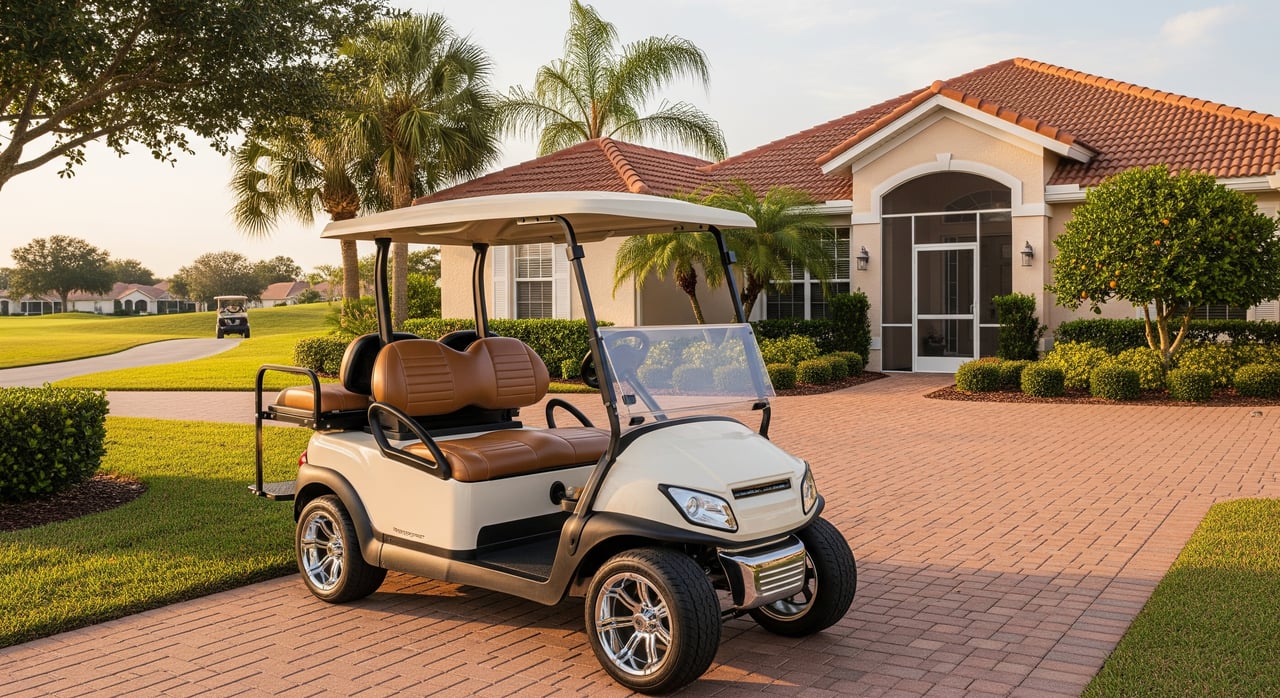
Thinking about swapping most car trips for golf cart rides in The Villages? You are not alone. Many residents choose carts for errands, dining, and fun because the community is built to make it easy. In this quick guide, you will learn how golf cart living really works, what to check in a home for charging and storage, and how to stay safe and compliant. Let’s dive in.
Why golf carts work here
The Villages was planned with golf carts in mind. You will find dedicated cart paths, cart-friendly access to shops and restaurants, and convenient parking near daily destinations. Town Squares offer entertainment and dining, and recreation centers provide pools, fitness classes, and hobby rooms that you can reach by cart.
Most daily trips are short. Many homes are a quick ride to a Town Square or a rec center, though distance varies by neighborhood. Newer or outer areas can be farther. If you are comparing homes, look at a community map and note how long a cart ride takes to your usual spots.
Amenities are set up for carts. Retail areas and amenity centers often have cart parking and marked crossings. You can expect clear signage that guides carts into commercial areas and community facilities.
Paths, crossings and rules
The Villages uses a network of paved cart paths, shared-use paths, and designated crossings at larger roads. In some areas, there are cart-only bridges or underpasses to keep you away from heavy traffic. At major crossings, you will see signs and signals. Plan to stop and yield where posted.
Golf carts and low-speed vehicles follow different rules. Florida law sets the baseline, and local ordinances add location-specific guidance. The Villages and Sumter County rules can specify which roadways allow carts, posted speeds, and right-of-way. Always follow posted signs and confirm current rules before you go.
Cart vs LSV explained
A golf cart is the common neighborhood vehicle you see on paths in The Villages. A low-speed vehicle, often called an LSV, is different. It meets federal safety standards, is street legal in certain areas, and generally requires registration and insurance. If you plan to drive on public roads, know which vehicle you own and what rules apply.
Practical safety tips
- Expect reduced speeds on paths, often in the 10 to 15 mph range, and follow posted limits.
- Obey all traffic control devices when operating where carts share public streets.
- Yield to pedestrians on mixed-use paths and use lights at night.
- Use turn signals or hand signals where required, and keep both hands free of distractions.
- Florida DUI laws can apply to carts and LSVs. Never drive impaired.
Charging and batteries at home
Your charging plan should match your battery type and your garage setup. Most neighborhood carts use either lead-acid batteries or lithium. Each has different maintenance needs and costs.
Lead-acid vs lithium basics
- Lead-acid batteries are common and cost less up front. Flooded types need periodic water checks. They are heavier and require ventilation during charging due to off-gassing.
- Lithium batteries, including LiFePO4, cost more to install but usually last longer, charge faster, and need less maintenance. They are lighter and typically include a Battery Management System.
- System voltage is often 36V or 48V, which varies by model. Ask for the exact specs on any cart you are considering.
Range depends on battery type, age, terrain, load, and how you drive. In The Villages, most trips are short, and many residents do not need to charge every day. If a seller has recently replaced batteries or upgraded to lithium, that is a useful selling point.
Home charging checklist
Most golf cart chargers plug into a standard 110 to 120 volt outlet. For safety and convenience, many owners add a dedicated, GFCI-protected outlet in the garage. Older or faster chargers may need higher amperage, so confirm your charger’s requirements.
If you have lead-acid batteries, plan for ventilation while charging. Keep the garage door cracked or use a vented space. Lithium batteries do not off-gas hydrogen during charging, but you should still follow the manufacturer’s instructions.
If you are installing a dedicated circuit or planning solar to support charging, consult a licensed electrician. Also review the charger and battery manufacturer’s guidance to confirm compatibility.
On-the-go charging
Some areas offer outlets near cart parking, but it is not universal. Do not assume public charging at Town Squares or commercial centers. Bring the charge you need for your outing, and confirm any on-site options before you rely on them.
Storage and garage features that matter
Most owners store carts in a garage. Some homes include a dedicated cart bay or a tandem layout that fits a cart and two cars. Others use a cart port or a covered carport. Driveway parking can be an option if allowed by property rules.
Carts are compact, but measurements matter. Many carts are about 4 to 5 feet wide and 8 to 10 feet long. Measure the door opening and interior space where you plan to park, and leave room to walk around and access the charger.
When you tour a home, look for:
- A GFCI-protected outlet in the garage, ideally on a dedicated circuit.
- Ventilation options if you plan to charge lead-acid batteries.
- A cart garage or storage alcove in the floor plan.
- Clear maneuvering space so you can park without tight turns or obstructions.
Community rules may limit where you can store and park carts outside. Some properties restrict overnight driveway parking or visible charging cords. Check POA or CDD documents for the property you are considering.
A buyer’s quick route test
Before you make an offer, take your likely daily route by cart if possible. Start from the property and drive to the nearest rec center and a Town Square. Note the time, path quality, and any crossings. If you do not have a cart yet, ride along with a friend or ask a nearby resident for insight.
Also check how easy it is to get to grocery stores, medical offices, and your favorite clubs or classes. If a route requires crossing a major road, make sure there is a marked cart crossing, bridge, or underpass.
Buying or selling with carts in mind
For buyers, bring a simple checklist to each showing:
- Does the garage or cart bay clearly fit my cart model and charger setup?
- Where is the nearest Town Square and rec center by cart, and how long is the ride?
- Are there cart paths that keep me off heavy traffic areas?
- Is there a GFCI outlet in the garage, and is the circuit adequate for my charger?
- Are there any property rules about cart storage or driveway parking?
For sellers, highlight cart-friendly features in your listing. Mention a dedicated cart garage, a recent electrical upgrade for charging, and any ventilation solutions. If you are including a cart, provide service records and the battery’s age and type. Buyers value clear information about battery condition and charger compatibility.
Your next step
Golf cart living in The Villages is practical, social, and fun when your home and daily routes support it. By checking garage space, electrical setup, local rules, and realistic driving patterns, you will avoid surprises and enjoy the lifestyle from day one. If you want help matching a home to your cart routine, connect with an expert who knows the neighborhoods and the paths.
Have questions or want to tour homes that fit your cart needs? Reach out to Caroline Fromkin for local guidance, buyer representation, and a free home valuation.
FAQs
How far can a golf cart typically go in The Villages?
- Range depends on battery type, battery age, load, terrain, and driving style. Many residents handle several short trips in a day without recharging, but you should confirm the range for your specific cart and battery.
Do I need to register or insure my cart in The Villages?
- Golf carts used only on community paths may not require registration, while low-speed vehicles on public roads generally require registration and insurance. Check Florida rules and local requirements for your vehicle type.
Can I charge a cart from any garage outlet?
- Many chargers plug into a standard 110 to 120 volt outlet, but some need higher amperage. A GFCI-protected, dedicated circuit is a common best practice. Confirm your charger’s specifications and consult a licensed electrician if needed.
How much garage space do I need for a cart?
- Many carts are about 4 to 5 feet wide and 8 to 10 feet long. Measure both the cart and the garage opening and interior depth. Leave room to walk, plug in the charger, and maneuver without tight turns.
Are there public charging outlets at Town Squares?
- Availability varies by location and business. Do not assume outlets will be available. Bring enough charge for your outing, and confirm any on-site options before you rely on them.
Can I get a DUI while driving a golf cart in Florida?
- Florida DUI laws can apply to carts and low-speed vehicles. Never drive impaired, and always follow posted traffic and community rules.